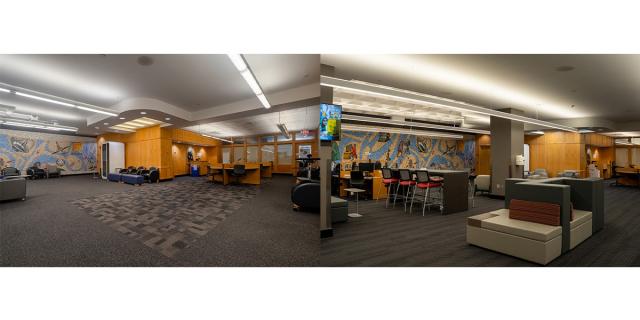
A first-floor renovation at the Health Sciences Library (HSL) located in Prior Hall is proving that thoughtful facilities design can do more than refresh a space; it can strengthen connections with the people who use it every day.
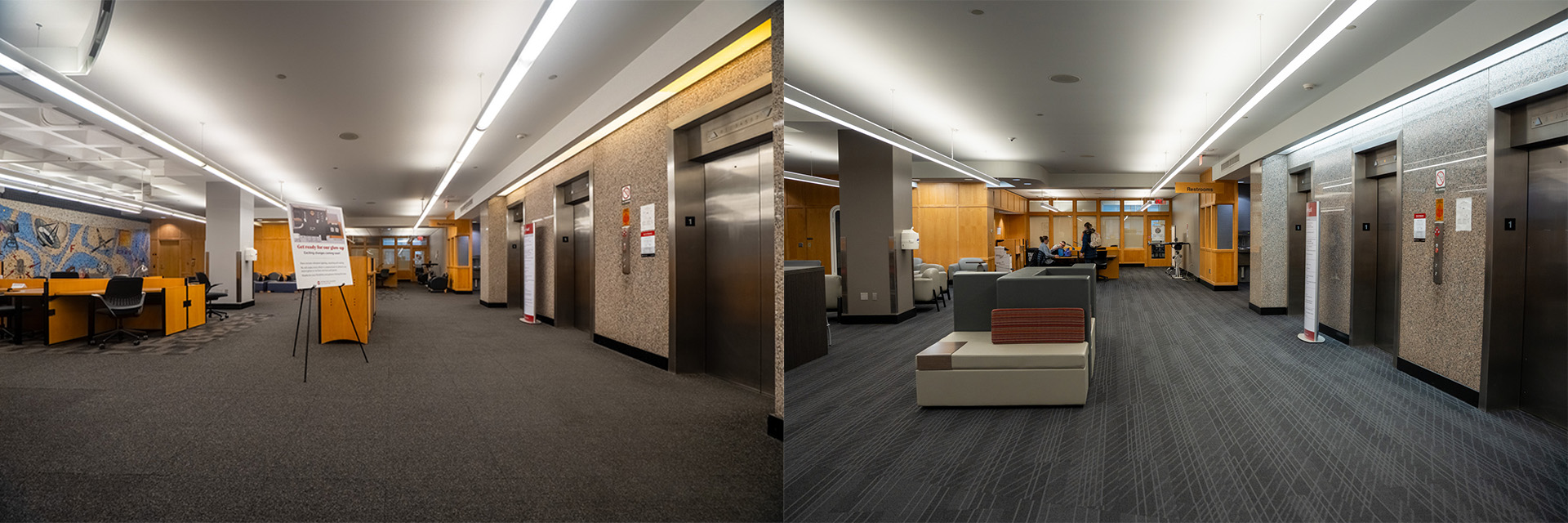
Completed in autumn 2025, Facilities Design and Construction (FDC) modernized the first floor of the HSL while preserving a key historic feature that library visitors already loved about the space. The result is a brighter, more flexible and welcoming environment that serves not only HSL patrons, but all who pass through the building.
Renovation work began in July 2025 and included new carpet, a fresh coat of paint, upgraded lighting and new furniture.
“The lighting matches our new standard, which immediately elevates the look and feel of the floor,” said Nolan Badgley, associate project manager for FDC. “Combined with the new finishes and furniture, the space feels cohesive and current.”
The new lighting standard switches from fluorescent to LED, which is a more sustainable approach to conserving energy.
One of the project’s guiding principles was ensuring that modernization didn’t come at the expense of character.
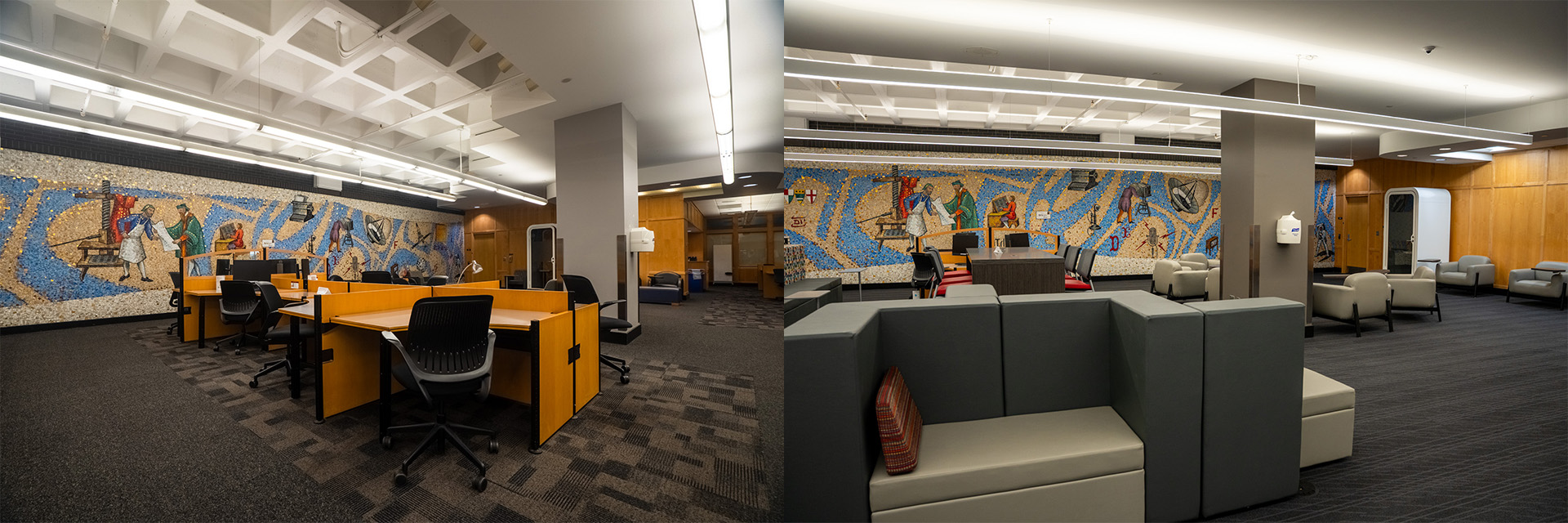
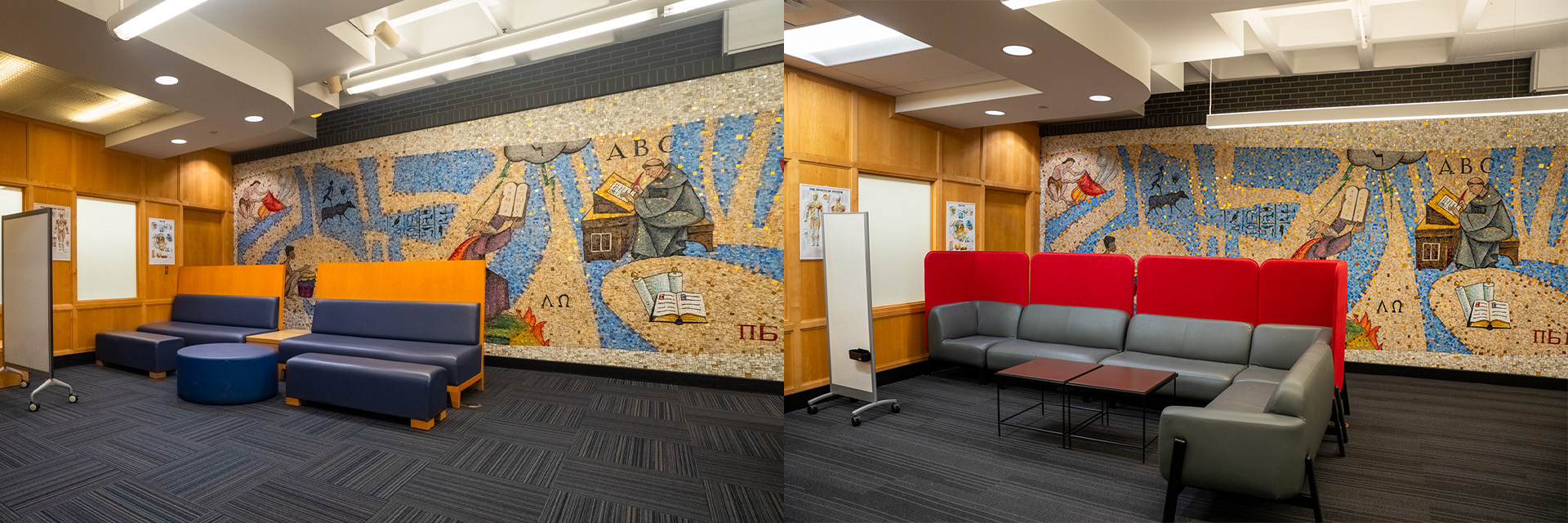
A most-loved feature of the HSL’s first floor is the library’s iconic mosaic mural. Originally installed in an outdoor tunnel in 1974, the mural became an indoor feature in 1996 when the ground level of Prior Hall was enclosed to form the HSL’s first floor. The mural is 67 feet long by 9 feet tall and was designed by Marguerite Gaudin of the Willet Studio in Philadelphia, Pennsylvania. In vivid colors including blue, scarlet and gold, the mural depicts the evolution of communication throughout human history, from stone tablet carvings to satellites.
“We’re proud of the fact that we modernized the space while also maintaining the mural as the focal point,” said Erika Losey, facilities operations analyst and the Health Sciences Library’s renovation lead for the project. “We made sure the renovation complemented the mural rather than detracted from it.”
The renovated area now offers increased seating with a variety of options designed to support different needs from quiet study to collaborative work.
“The floor remains a collaborative and inviting environment for all visitors in the building, not just library patrons,” she said. “That’s something we consistently hear reflected back in the positive feedback from our users.”
The HSL team also took a creative approach to communication and expectation-setting before renovations. Clear signage, frequent updates and even a bit of fun helped turn a potential challenge into an engaging experience.
“We had an interactive furniture fabric ‘petting zoo’ sign displayed so our patrons could see and feel the actual fabrics that would be used on the new furniture before installation,” said Losey. “We showed that we can be responsive to feedback and that we are a partner versus just a service provider or physical space on campus.”